
“Fussy” skin does not necessarily need more products
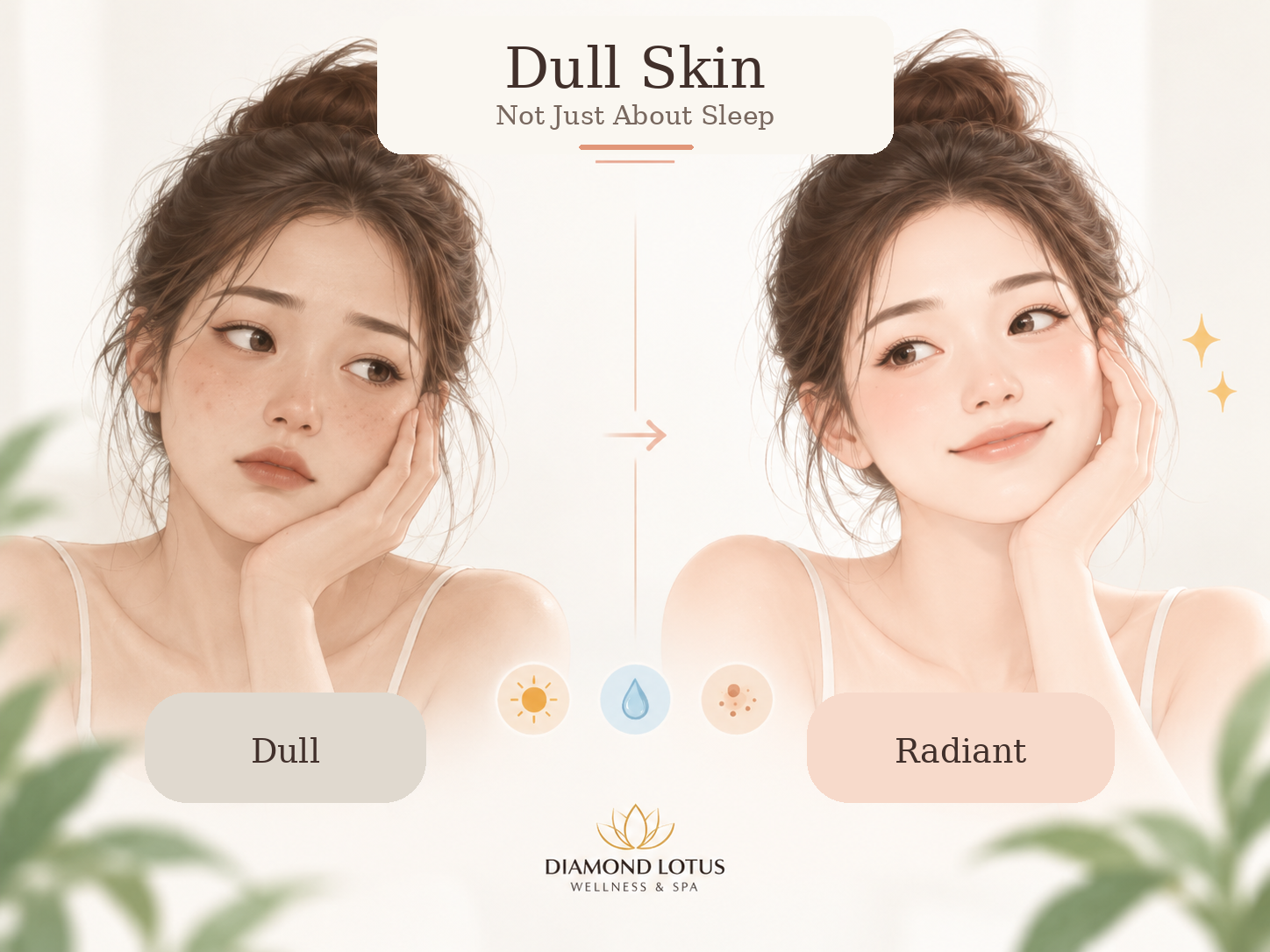
For some people, simply changing cleansers, trying a new serum, or spending a long time in an air-conditioned room can cause the skin to start stinging, feeling tight, becoming red, or itching. What can be confusing is that the skin may look almost normal while the discomfort feels very real.
According to the consensus definition from experts of the International Forum for the Study of Itch (IFSI), sensitive skin is a syndrome characterized by unpleasant sensations such as stinging, burning, pain, itching, or tingling in response to stimuli that normally should not provoke such sensations. The skin may appear completely normal or show only mild redness.[1]
Therefore, sensitive skin care should not begin with the question “What active ingredient should I add?” but with a simpler question: “How can I reduce the number of factors that may irritate the skin and keep the protective barrier stable?”

1. Sensitive skin is not the same as a skin allergy
Sensitive skin is often self-identified based on sensations. In many cases, there are no obvious skin lesions, and this subjective nature is precisely what makes assessment difficult.[1–6]
It is important not to use “sensitive skin” as a catch-all label for every case of redness, itching, or flaking. Contact dermatitis, atopic dermatitis, rosacea, seborrheic dermatitis, and many other skin diseases can cause similar symptoms. Some conditions can also weaken the epidermal barrier and make the skin more reactive.[2,3]
In other words, sensitive skin is a sensory syndrome; allergies and dermatitis are conditions with their own mechanisms and management approaches. When symptoms persist or obvious lesions are present, professional diagnosis is more important than continuing to experiment with cosmetics.
2. Why can sensitive skin sting even when no visible damage is present?
The skin barrier may not be functioning optimally
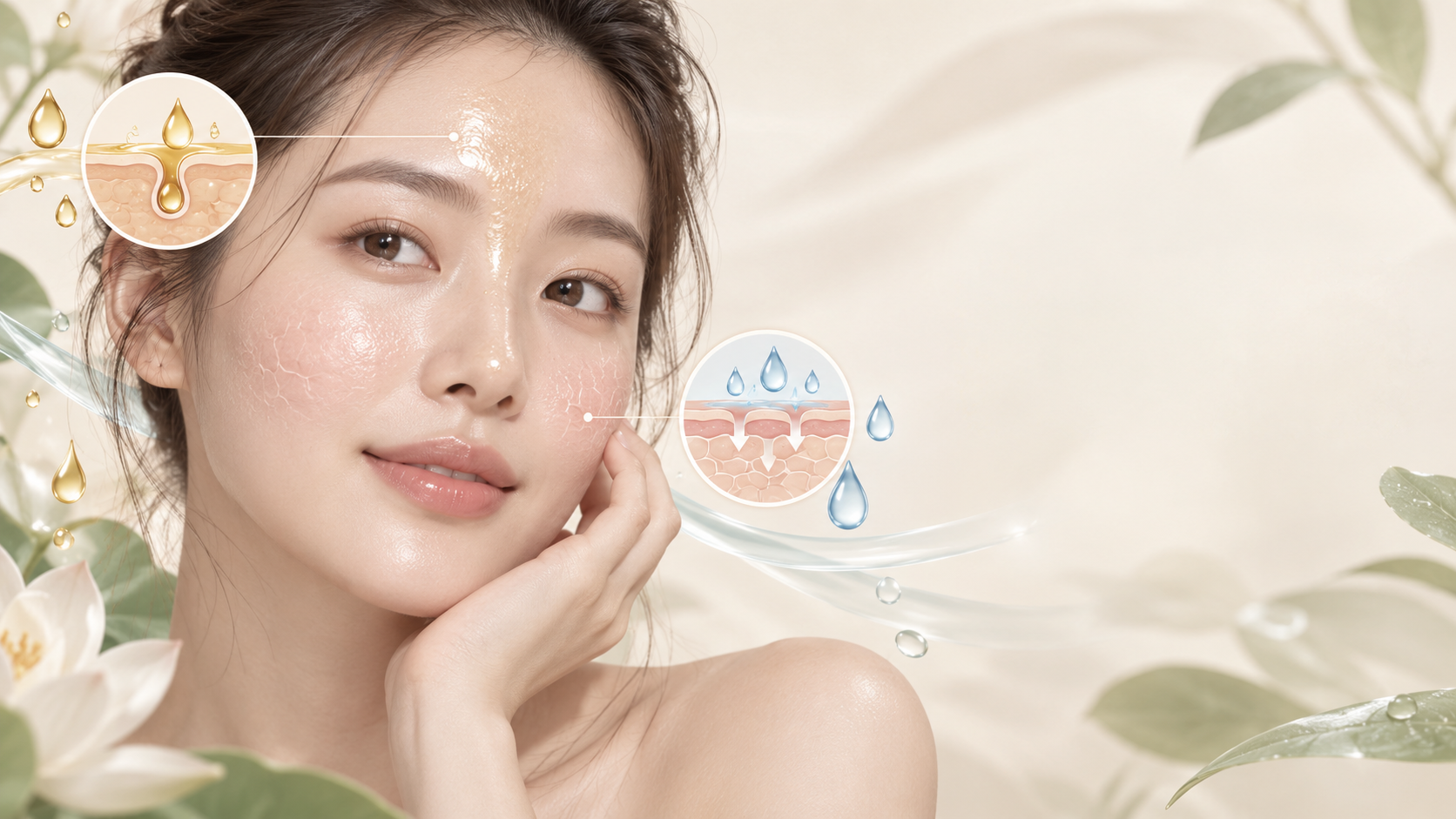
Some studies have observed increased transepidermal water loss (TEWL), reduced ceramides, or changes related to the stratum corneum in people with sensitive skin. When barrier integrity is compromised, potentially irritating substances may penetrate more easily, and nerve endings may also be less protected.[3,6]
However, the IFSI position paper notes that skin barrier abnormalities are often associated with sensitive skin but cannot yet be regarded as the sole cause or as a direct causal relationship in every case.[2]
The skin’s sensory nervous system is also involved
Recent reviews show increasing attention to neurological mechanisms. The TRPV1 channel – which senses heat, pH, and chemical stimuli – is associated with pain, itching, and burning sensations. Some studies have found increased TRPV1 expression in people with sensitive skin, while others have reported changes in the density of small nerve fibers in the epidermis.[6,7,10]
This helps explain a familiar situation: someone may experience pronounced burning or stinging while a doctor or practitioner sees very little redness, or none at all.
3. What factors commonly make sensitive skin more uncomfortable?
The literature describes sensitive skin as a multifactorial condition. Commonly reported triggers include cosmetics, soaps or detergents, temperature changes, heat, cold, wind, sunlight, air conditioning, dry air, pollution, and stress.[2–7]
In a review cited by the IFSI position paper, cosmetics were among the most prominently reported triggers; ingredients that may cause discomfort in some people include fragrances, alcohol, preservatives, surfactants, propylene glycol, or exfoliating acids.[2]
This does not mean everyone with sensitive skin must permanently avoid all of these ingredients. Tolerance is individual. A more practical approach is to reduce the number of variables at one time and monitor how your own skin responds.
4. Why can a longer routine sometimes be harder to manage?
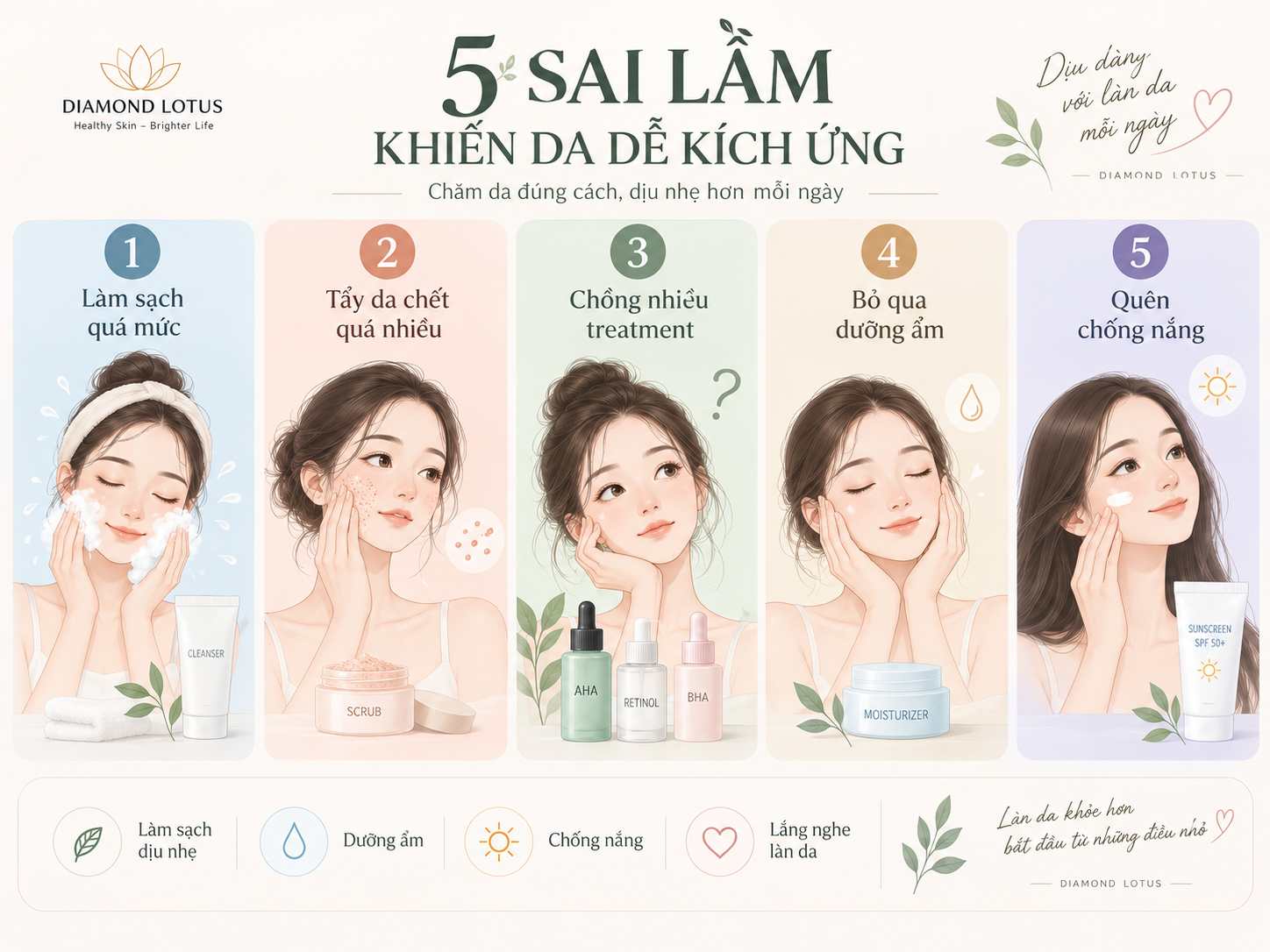
Each new product introduces another set of ingredients to the skin. When acid toners, vitamin C, retinoids, treatment serums, masks, exfoliants, and multiple moisturizing layers are used simultaneously, identifying “what is causing the irritation” becomes nearly impossible.
The “less, but consistent” approach is also aligned with practical guidance from the American Academy of Dermatology (AAD): a basic routine may consist only of gentle cleansing, moisturizing, and sun protection; adding too many products or strong active ingredients too early can increase irritation.[8,9]
For sensitive skin, a minimalist routine is not “insufficient” care. It is a way to reduce variables so you can observe the skin more clearly.
5. A minimalist skincare routine can start with 3 steps
| Step | Goal | Practical guidance |
| 1. Gentle cleansing | Remove dirt, sweat, and products from the skin while limiting friction and excessive cleansing. | Use a gentle, non-abrasive cleanser; lukewarm water; fingertips; and avoid harsh scrubbing. |
| 2. Moisturizing | Support stratum corneum hydration and the skin barrier. | Prioritize simple, well-tolerated formulas with few unnecessary ingredients; choose fragrance-free products if your skin easily reacts to fragrance. |
| 3. Sun protection | Reduce UV exposure – a factor that may increase redness, burning, and skin barrier disruption. | Choose broad-spectrum SPF ≥30 in a formulation your skin tolerates; combine it with shade, hats, and protective clothing. |
Step 1. Làm sạch nhẹ nhàng
The AAD recommends using a gentle, non-abrasive, alcohol-free cleanser; wetting the skin with lukewarm water, applying cleanser with the fingertips, avoiding abrasive washcloths or cleansing pads, and then gently patting the skin dry.[8]
The AAD also generally recommends washing no more than twice a day and after heavy sweating. For people with dry or sensitive skin, washing once in the evening may be sufficient in some cases.[8,9]
Step 2. Moisturizing – nhưng đừng biến kem dưỡng thành một “cocktail” quá phức tạp
Moisturizing may be helpful because dry skin is often associated with sensitivity symptoms, and some studies have reported improvement with moisturizers or emollients.[2,3] The IFSI position paper suggests prioritizing well-tolerated formulas with as few ingredients as possible.[2]
More important than the name of an active ingredient is whether you can use the product consistently without stinging, redness, or lesions. A “famous” product that makes your skin uncomfortable is not the right choice for you.
Step 3. Sun protection đều đặn
The IFSI emphasizes the need for UV protection in people with sensitive skin. Sun exposure may promote neuropeptide release, increase inflammatory mediators, and increase epidermal permeability. Recommendations include limiting sun exposure, seeking shade, wearing protective clothing, and using broad-spectrum sunscreen with an SPF of at least 30.[2]
However, sunscreen can also cause discomfort for some people. Therefore, the goal is not to find the “best sunscreen for everyone,” but to find a broad-spectrum formula that your skin can use consistently.
6. When should you add a new product or active ingredient?
Once the skin is stable with the three basic steps, you can consider adding products for specific needs. The AAD advises introducing one new product at a time rather than changing several things at once; for sensitive skin, you can test a small amount on a limited area before applying it to the entire face.[9]
This is a useful principle because if a reaction occurs, you have a better chance of identifying which new product may be involved. If you change your cleanser, serum, moisturizer, and sunscreen all at once, it becomes nearly impossible to know which one should be stopped.
7. Does sensitive skin need to avoid all “strong active ingredients”?
Not necessarily. Sensitive skin does not mean you can never use retinoids, vitamin C, acids, or other treatment actives. However, tolerance and indications need to be individualized.
Modern literature on sensitive skin mechanisms is exploring approaches such as barrier restoration, TRPV1 modulation, and inflammation control.[10] However, much of the data on many “soothing active ingredients” still comes from cell models, animal studies, or limited-scale research; therefore, mechanistic findings should not be translated into guaranteed efficacy claims for every commercial product.
If an active ingredient is being used for a skin condition – for example, a retinoid for acne or medication for rosacea – the plan should prioritize treatment goals and tolerability under professional guidance rather than automatically eliminating all treatments simply because the skin feels sensitive.
8. Do “fragrance-free,” “hypoallergenic,” and “for sensitive skin” guarantee safety?
No marketing label can guarantee that a product will suit everyone. The IFSI position paper prioritizes well-tolerated products with few unnecessary ingredients and fragrance-free formulations when fragrance is a trigger.[2] The AAD also notes that fragrance-free products are often a gentler choice for irritation-prone skin.[9]
However, individual reactions can still occur with any formulation. Therefore, observing your skin and introducing products gradually is more useful than relying solely on labels on the packaging.
9. When should you stop experimenting with cosmetics on your own?
You should consider seeing a dermatologist if you experience any of the following:
- persistent or worsening redness, itching, pain, or burning;
- significant peeling, swelling, oozing, blisters, or crusting;
- repeated reactions to multiple products despite simplifying your skincare;
- persistent localized redness around the nose, mouth, eyes, or other areas;
- suspected contact dermatitis, atopic dermatitis, rosacea, or another skin condition;
- symptoms that significantly affect sleep, daily activities, or psychological well-being.
Sensitive skin is a diagnosis of exclusion: the symptoms should not be explained by a skin disease with specific lesions.[1] Therefore, when clear abnormalities are present, identifying the cause is more important than continuing to switch products.
10. A simple principle: reduce variables, improve observation
For sensitive skin, “minimalist” does not mean using as few products as possible forever. It means building a sufficiently simple foundation that allows the skin to stabilize and lets you know exactly what you are changing.
You can start with:
- Gentle cleansing.
- Appropriate moisturizing.
- Sun protection that your skin tolerates.
- Add one new product at a time.
- Reduce or stop a product when a clear reaction occurs.
- See a dermatologist when symptoms persist or lesions develop.
Consistency is often more valuable than a 10-step routine. This is also why the AAD emphasizes that more products do not necessarily mean better results; consistent care with fewer suitable products often provides a better foundation.[9]
| DIAMOND LOTUS NOTE
“Sensitive skin” is not a fixed skin type like oily or dry skin. Sensations and tolerance can change with the weather, stress, environment, skin conditions, and the products you are using. At Diamond Lotus, skincare should begin by observing the skin’s actual condition and tolerance rather than applying the same routine to everyone. Fewer steps – but better suited to your skin. Explore skincare experiences at Diamond Lotus → |
The information in this article is for beauty-care reference purposes only and does not replace diagnosis or treatment by a dermatologist.
References
1. Misery L, Ständer S, Szepietowski JC, Reich A, Wallengren J, Evers AWM, et al. Definition of sensitive skin: an expert position paper from the Special Interest Group on Sensitive Skin of the International Forum for the Study of Itch. Acta Derm Venereol. 2017;97(1):4-6. doi:10.2340/00015555-2397.
2. Misery L, Weisshaar E, Brenaut E, Evers AWM, Huet F, Ständer S, et al. Pathophysiology and management of sensitive skin: position paper from the Special Interest Group on Sensitive Skin of the International Forum for the Study of Itch. J Eur Acad Dermatol Venereol. 2020;34(2):222-229. doi:10.1111/jdv.16000.
3. Duarte I, Silveira JEP, Hafner MFS, Toyota R, Pedroso DMM. Sensitive skin: review of an ascending concept. An Bras Dermatol. 2017;92(4):521-525. doi:10.1590/abd1806-4841.201756111.
4. Berardesca E, Farage M, Maibach H. Sensitive skin: an overview. Int J Cosmet Sci. 2013;35(1):2-8. doi:10.1111/j.1468-2494.2012.00754.x.
5. Inamadar AC, Palit A. Sensitive skin: an overview. Indian J Dermatol Venereol Leprol. 2013;79(1):9-16. doi:10.4103/0378-6323.104664.
6. Farage MA. Understanding the sensitive skin subject to achieve a more holistic diagnosis. Cosmetics. 2021;8(3):81. doi:10.3390/cosmetics8030081.
7. Misery L. Sensitive skins may be neuropathic disorders: lessons from studies on skin and other organs. Cosmetics. 2021;8(1):14. doi:10.3390/cosmetics8010014.
8. American Academy of Dermatology Association. Face washing 101 [Internet]. Rosemont (IL): American Academy of Dermatology Association [cited 2026 Sep 8]. Available from: https://www.aad.org/public/everyday-care/skin-care-basics/care/face-washing-101.
9. American Academy of Dermatology Association. A dermatologist’s guide to skincare from growing up to glowing up [Internet]. Rosemont (IL): American Academy of Dermatology Association; 2025 Oct 28 [cited 2026 Sep 8]. Available from: https://www.aad.org/news/dermatologist-guide-skincare.
10. Chen B, Tang H, Liu Z, Qiao K, Chen X, Liu S, et al. Mechanisms of sensitive skin and the soothing effects of active compounds: a review. Cosmetics. 2024;11(6):190. doi:10.3390/cosmetics11060190.