Getting enough sleep is good for your skin — but it is not the only factor that determines radiance
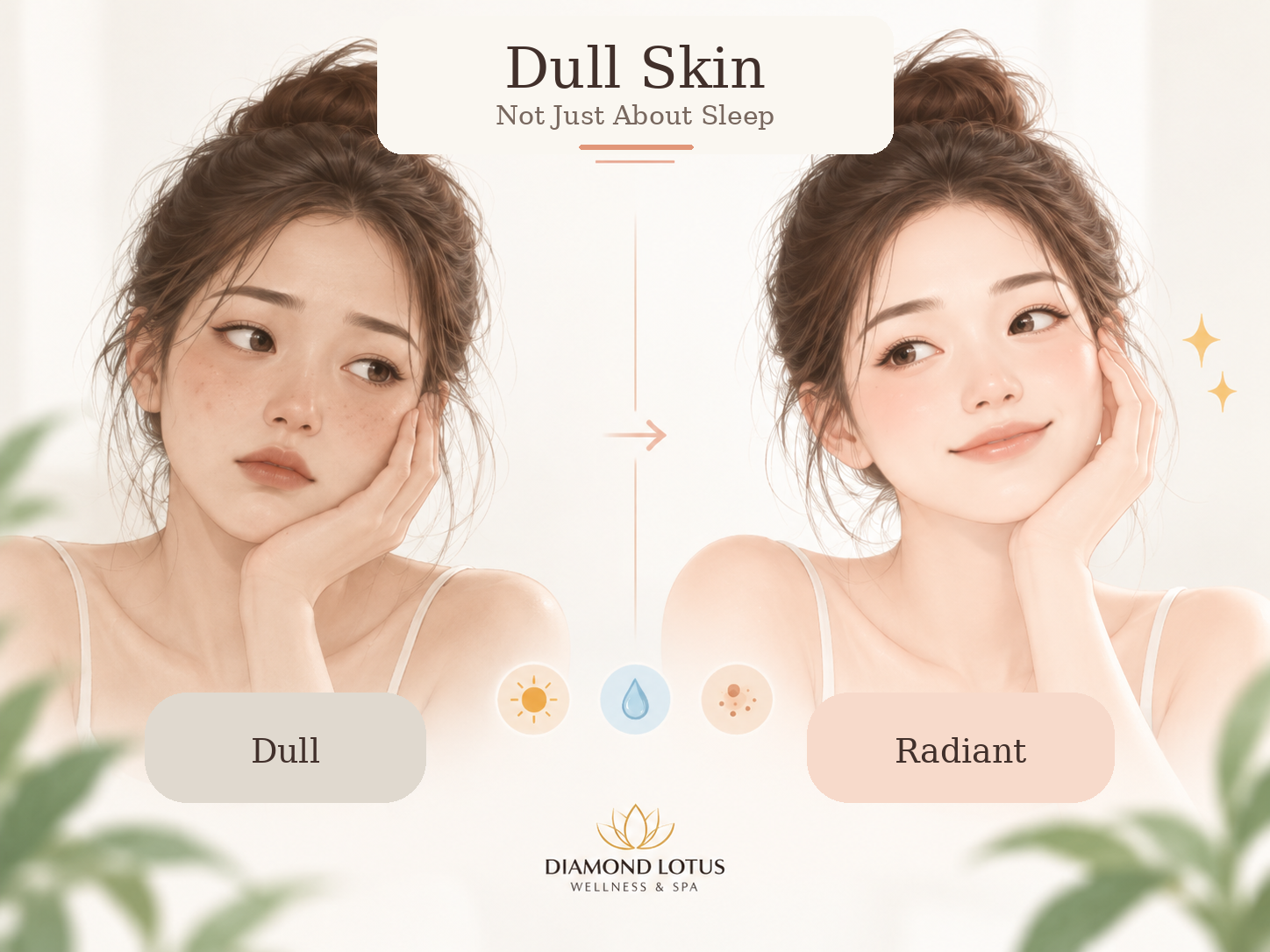
“Dull skin” describes an appearance that looks less bright or lacks radiance; it is not a diagnosis in itself. In the sources reviewed for this article, dullness is discussed alongside dryness, reduced radiance, pigmentary changes, and photoaging.[2,5]
Research on sleep restriction shows that insufficient sleep can indeed alter skin and facial parameters. However, this does not mean that getting enough sleep will automatically make the skin look bright. Hydration of the stratum corneum, ultraviolet exposure, post-inflammatory pigmentation, and environmental pollution can all affect the appearance of the skin.[1–6]
1. Sleep affects the skin, but “getting enough sleep” does not explain everything
In a study by Léger and colleagues involving 24 healthy women who were normally good sleepers, two nights restricted to only 3 hours of sleep per night reduced skin hydration, increased transepidermal water loss, decreased some biomechanical properties of the skin, and reduced facial brightness and color saturation in photographs.[1]
This study is useful in showing that sleep loss can make the face appear less fresh. However, it examined marked short-term sleep restriction, not people who “sleep enough but still have dull skin.” It would therefore be inappropriate to infer that sleep is the sole cause of every case of reduced skin radiance.
What this means
Adequate sleep is an important foundation for good health, but if the skin still looks tired or less luminous, other factors should also be considered rather than focusing only on the number of hours slept.
2. Dehydrated, dry-looking skin can reduce radiance
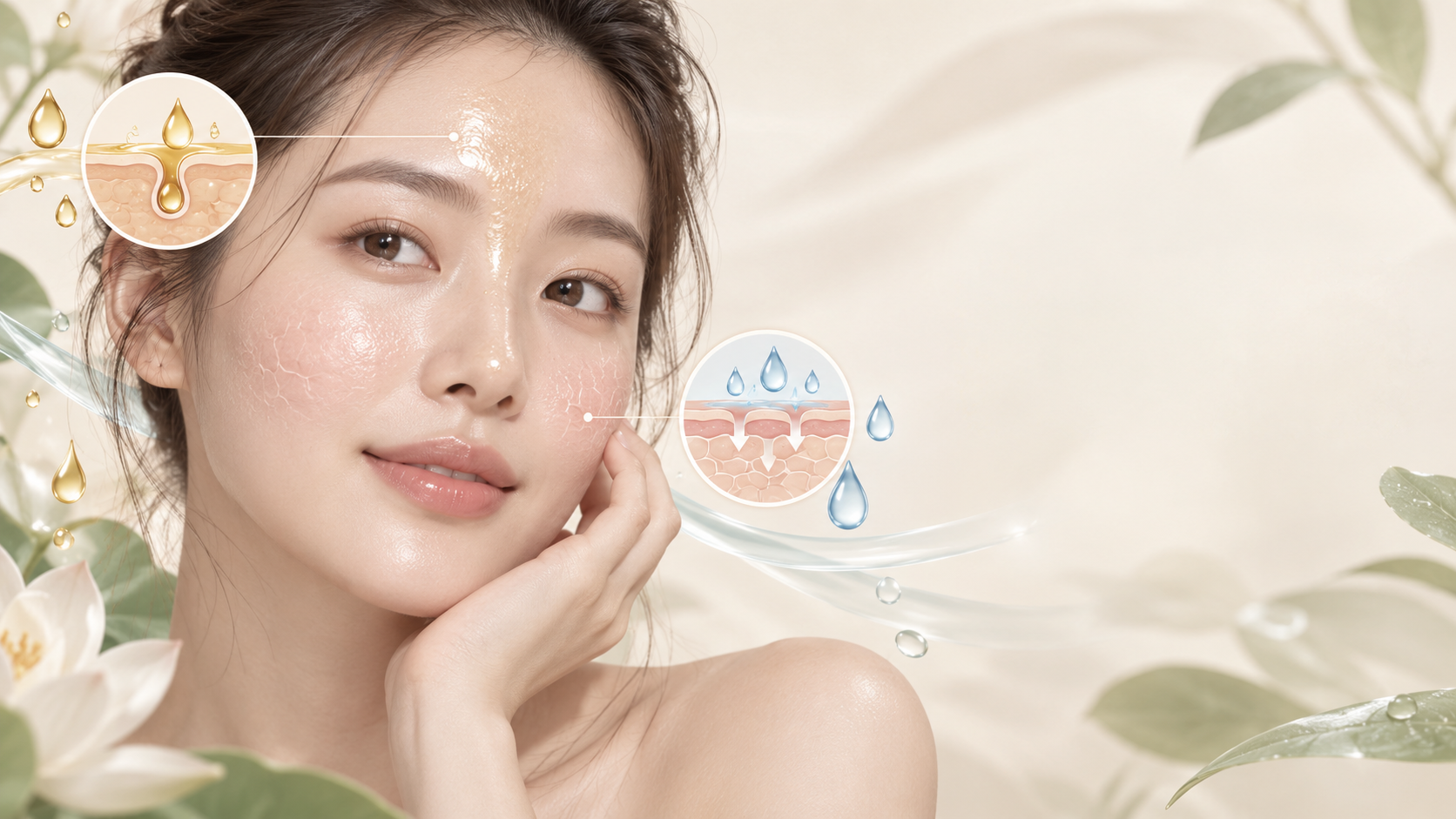
Bianchini and colleagues described how dry skin can appear rough, dull, and less radiant. In a 12-week study of participants who perceived their facial skin as dry and dull, increased hydration with a specific moisturizer formulation was associated with clinical improvements in radiance, clarity, and skin texture.[2]
The authors also discussed how water content in the skin may influence the way light interacts with the surface and deeper layers. A smoother surface may alter light reflection and scattering, which can make the skin appear more radiant.[2]
It is important to note that this study evaluated a specific product formulation and that several authors were employees of the manufacturer. The findings therefore support an association between hydration and skin appearance, but should not be used to claim that all moisturizers produce the same results.
3. Sun exposure can make skin look dull even when you sleep well
A 2026 review on photoaging describes chronic sun-induced skin aging as presenting with deep wrinkles, hyperpigmentation, solar lentigines, and skin dullness.[5] UVA and UVB can generate reactive oxygen species, activate signaling pathways that damage the extracellular matrix, and alter pigmentation.
UVA can cause immediate and persistent darkening, while UV-induced DNA damage can trigger delayed melanogenesis, leading to increased pigmentation that may last for weeks to months.[5] A person may therefore sleep adequately yet still notice less radiant skin because of cumulative sun exposure or increasingly uneven skin tone.
What can you do?
Photoprotection should be regarded as a foundational step. The photoaging literature emphasizes protection against UVA and UVB and — for some pigmentary conditions — visible light as well.[5]
4. What looks like “dullness” may actually be uneven tone caused by post-inflammatory hyperpigmentation
Post-inflammatory hyperpigmentation (PIH) is an increase in melanin production or deposition following inflammation or skin injury. Inflammatory mediators can activate melanocytes, and ultraviolet exposure or excessive sun exposure may worsen the condition.[3]
In a 2024 systematic review focused on people with darker skin tones, most cases of PIH were triggered by inflammatory conditions and were commonly located on the face. PIH can persist and may be difficult to treat.[3]
For acne, a 2025 paper also showed that acne-induced PIH can occur even when clinically obvious inflammation is not present. UV radiation, visible light, and air pollution are all cited as factors that may contribute to its development.[4]
What can you do?
If the perceived “dullness” is mainly due to brown marks left after acne, the priority should be to control acne/inflammation and prevent new pigmentation rather than simply trying to “brighten the whole face.” The literature emphasizes photoprotection and early prevention.[3,4]
5. Air pollution may contribute to pigmentation and uneven-looking skin
The source on pollution describes how particulate matter and other pollutants can activate the aryl hydrocarbon receptor and increase reactive oxygen species. The resulting oxidative stress and inflammatory responses may stimulate melanocytes and are associated with conditions such as melasma, solar/age-related lentigines, and diffuse facial hyperpigmentation.[6]
The same review notes that pollution and ultraviolet radiation may act synergistically. The 2025 paper on acne-induced PIH similarly reports that particulate matter and polycyclic aromatic hydrocarbons can increase oxidative stress and thereby raise the risk of pigmentary disorders.[4,6]
What can you do?
No cosmetic routine can completely eliminate the effects of pollution. A practical approach is to cleanse gently after a day of environmental exposure, maintain the skin barrier, practice photoprotection, and avoid unnecessary additional irritation.
6. So where should care for dull-looking skin begin?
| Factor to review | Possible clues | Practical care approach |
| Sleep | Insufficient sleep or an irregular sleep schedule | Maintain an appropriate sleep duration and regular schedule; do not expect adequate sleep alone to resolve every other cause |
| Hydration | Dry, rough, tight skin with reduced suppleness | Cleanse gently and moisturize with a formula your skin tolerates well |
| Sun exposure | Darkening, brown spots, uneven skin tone | Use consistent photoprotection; combine with hats and shade when appropriate |
| After acne/inflammation | Brown macules remaining after lesions heal | Prioritize control of the inflammatory cause and prevention of new pigmentation; consider a dermatologist if persistent |
| Pollution | Frequent exposure to dust, smoke, or urban pollution | Cleanse gently, avoid rubbing, maintain the skin barrier, and practice photoprotection |
7. Should you exfoliate aggressively to “bring back the glow”?
The attached sources do not show that every case of dull-looking skin requires aggressive exfoliation. In fact, when dryness, post-inflammatory hyperpigmentation, or irritation is the dominant issue, provoking more inflammation may make the problem more complicated, especially in people who are prone to PIH.[3,4]
If brightening or exfoliating products are used, tolerability should come first and changes should be introduced one step at a time. For persistent hyperpigmentation, treatments such as retinoids, hydroquinone, azelaic acid, lasers, or other approaches need to be selected according to the individual condition; the systematic review found that treatment efficacy is variable and some interventions can worsen pigmentation.[3]
8. When should you look beyond “brightening skincare”?
The sources used for this article focus on skin, sleep, hydration, light exposure, pollution, and pigmentation. They are not sufficient to establish systemic medical causes of a change in skin color. Therefore, dullness should not automatically be attributed to concepts such as “poor detoxification,” “bad blood,” or “weak liver function” without medical assessment.
If your skin color changes noticeably or abnormally, or if you have accompanying systemic symptoms, medical evaluation is more appropriate than continuing to experiment with brightening products.
| DIAMOND LOTUS NOTE
Radiant skin depends on more than how many hours you sleep. Hydration, sun exposure, post-inflammatory pigmentation, and the environment can all leave visible effects on the skin. Instead of trying to “whiten quickly,” start with the basics: gentle cleansing, appropriate moisturization, photoprotection, and addressing the real cause of uneven skin tone. Understand the cause before choosing the solution. Explore skincare experiences at Diamond Lotus → |
This article is intended for general beauty and skincare information and does not replace diagnosis or treatment by a dermatologist.
References
- Léger D, Gauriau C, Etzi C, Ralambondrainy S, Heusele C, Schnebert S, et al. “You look sleepy…” The impact of sleep restriction on skin parameters and facial appearance of 24 women. Sleep Med. 2022;89:97-103. doi:10.1016/j.sleep.2021.11.011.
- Bianchini JM, Zhang Q, Hanna G, Flach CR, Wang H, Southall MD, et al. A unique gel matrix moisturizer delivers deep hydration resulting in significant clinical improvement in radiance and texture. Clin Cosmet Investig Dermatol. 2019;12:229-239. doi:10.2147/CCID.S196110.
- Mar K, Khalid B, Maazi M, Ahmed R, Wang OJ, Khosravi-Hafshejani T. Treatment of post-inflammatory hyperpigmentation in skin of colour: a systematic review. J Cutan Med Surg. 2024;28(5):473-480. doi:10.1177/12034754241265716.
- Auffret N, Leccia MT, Ballanger F, Claudel JP, Dahan S, Dréno B. Acne-induced post-inflammatory hyperpigmentation: from grading to treatment. Acta Derm Venereol. 2025;105:adv42925. doi:10.2340/actadv.v105.42925.
- Tsai J, Kang S. Photoaging: update on pathogenesis, prevention, and treatment. Ann Dermatol. 2026;38(3):167-176. doi:10.5021/ad.26.006.
- Khunger N, Dash A. Impact of air pollution on skin pigmentation: mechanisms and protective strategies. Int J Dermatol. 2025;64(10):1788-1801. doi:10.1111/ijd.17867.